Campus Network by the Numbers
Campus Network by the Numbers
Listen to this article
Improved network connectivity is now reaching everyone across the UNLV campus as the majority of the network infrastructure upgrade to Juniper’s platform, driven by artificial intelligence (AI), is now complete. While this cutting-edge technology seamlessly blends into campus buildings and classrooms, the scale of the project is far from small. Check out some noteworthy numbers and how they compare to famous local landmarks.
The Impact
60,000 devices across students, faculty, and staff will now have an easier time staying connected to the campus network. This many devices is nearly enough to fill every seat in Allegiant Stadium or to fill UNLV’s Thomas and Mack Center three times over.
124 buildings and 27 WiFi bollards received the new, enhanced network equipment to better support technology use in both indoor and outdoor spaces across campus. Improved connectivity now spans over the 350-acre UNLV campus, which is the same size as 40 Las Vegas Ballparks put together.
Eric Kraft, interim manager of network services, explained that it had been nearly nine years since the network infrastructure underwent such an extensive upgrade. “We had a timely opportunity to modernize our campus network,” Kraft said. “A modern, AI-assisted network directly enhances connectivity on campus, meaning students have the opportunity to seamlessly connect to online learning resources, and faculty can rely on stable service for teaching and research.”
The Equipment
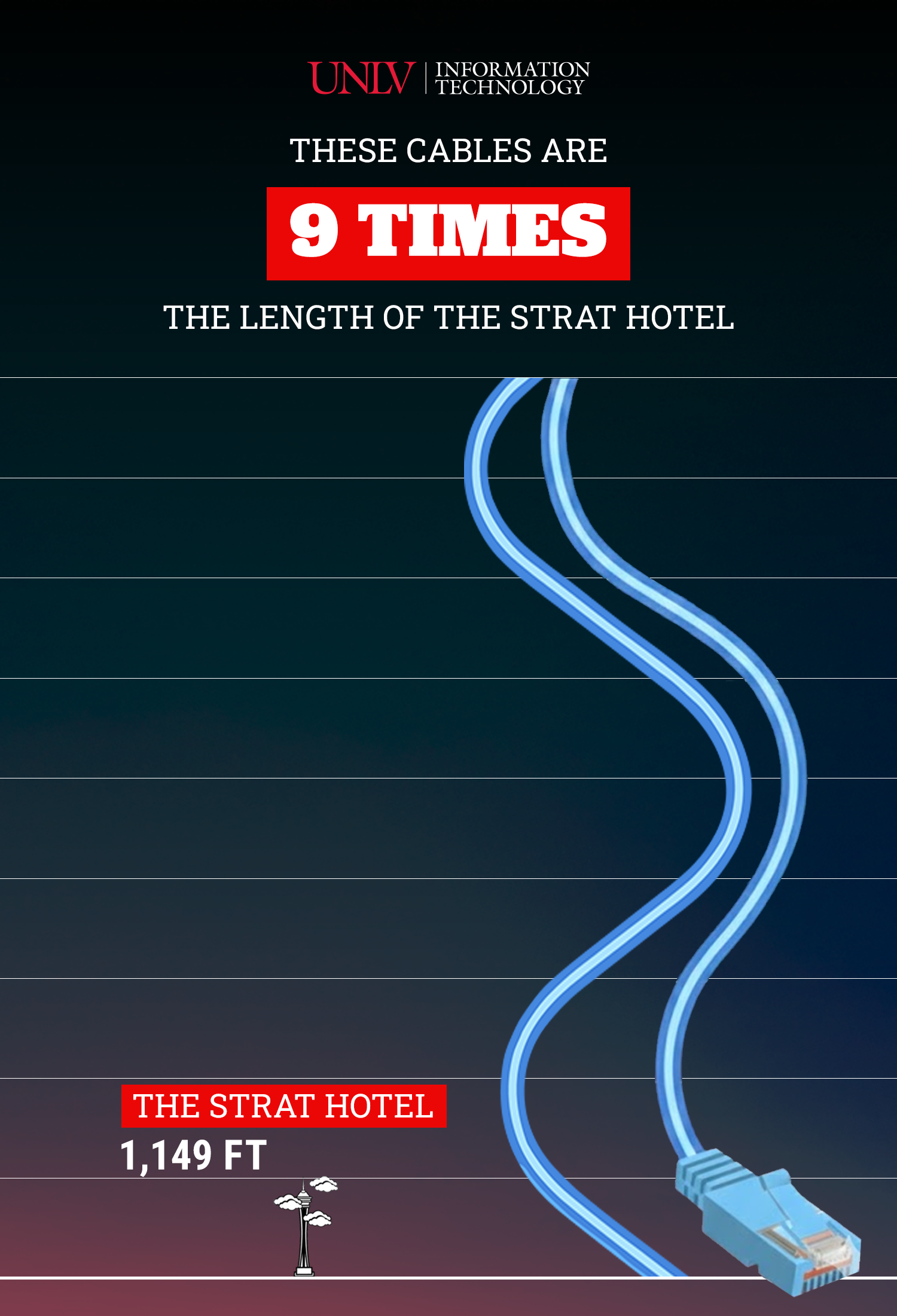
11,328 feet of cable was either added or replaced to accommodate the network infrastructure improvements. When put together, these cables are 9 times the length of The STRAT Hotel, Casino & Tower or nearly enough to reach the deepest part of the Grand Canyon and back up again.
3,400 access points were installed as part of the upgrade, helping provide a more seamless network connection when moving between different campus buildings and outdoor areas. This many access points is almost enough to fill every room in the upcoming Hard Rock Las Vegas casino, the largest casino-hotel project on the Las Vegas Strip yet.
700 network switches were installed in addition to these access points, making up nearly one switch for every foot of the Hoover Dam. Juniper’s AI technology allows for the switches to automatically detect poor connection issues and fix them all on its own, ensuring a stronger, more reliable connection for everyone on campus.
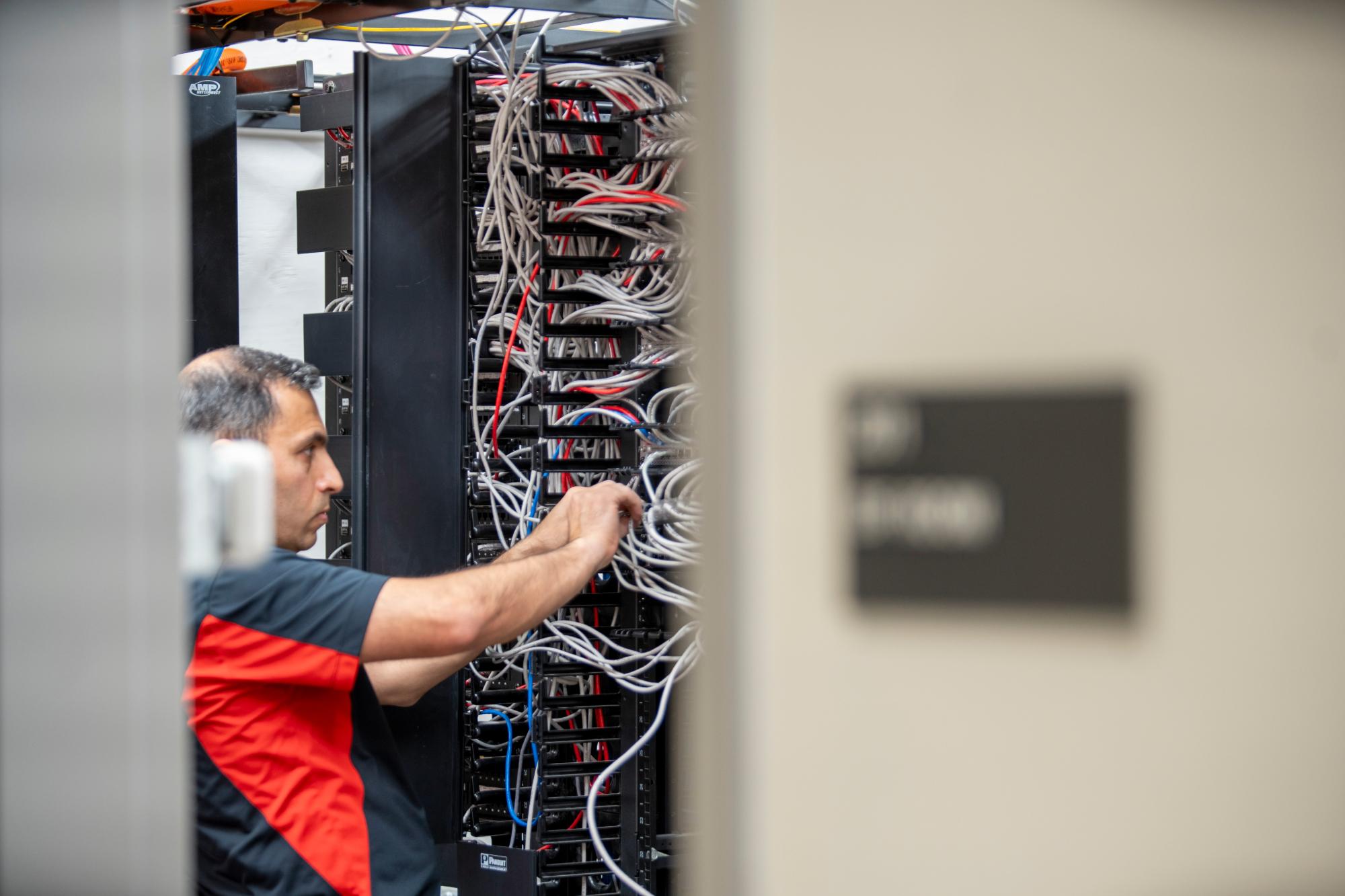
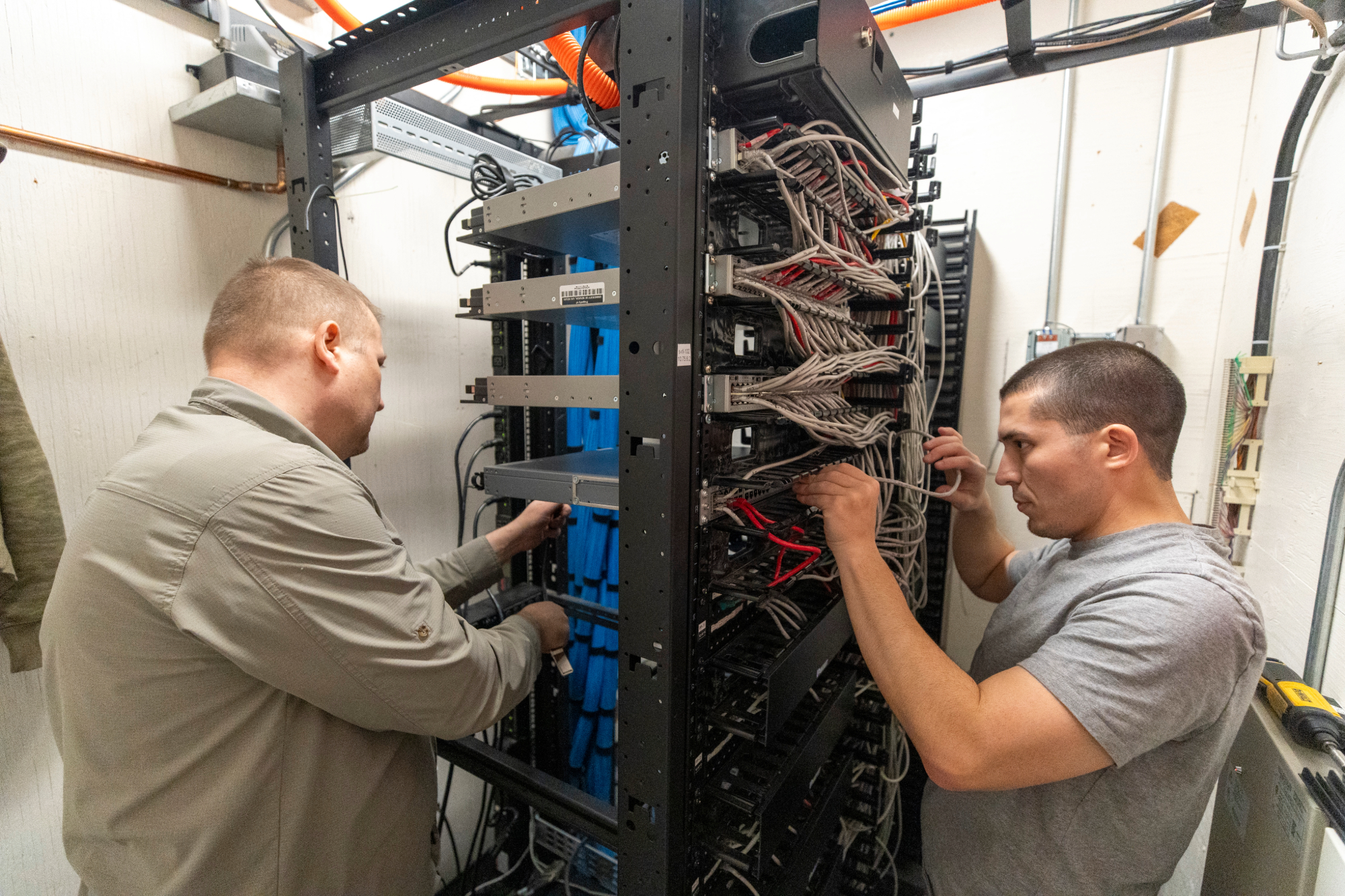
257 intermediate distribution frame (IDF) rooms were updated or installed with one or multiple racks that help connect multiple devices to a central network location. These equipment rooms help hundreds of people all stay connected to the network even in large and busy buildings, such as the LiedLibrary, which hosts around 5,000 visitors each day.
The Team
10 engineers, 5 student workers, and 2 public service interns made up the network development engineering team that installed the hundreds of network switches around campus. Various teams across the university also assisted with the WiFi upgrades, ensuring a smooth transition as network installations transitioned from one building to another.
“This was my first time working on a project this large,” said Ryan Gonzales, public service intern for the network team. “I not only learned a lot about Juniper’s architecture and how it interacts with different network systems, but I also helped lead a team of students throughout the entire project which was a great learning experience.”
A total of 534 hours were spent installing switches, access points, and various network technology around dozens of campus spaces, not accounting for the team’s countless hours planning and testing the equipment itself. In this time, you could watch the classic Viva Las Vegas film starring Elvis Presley 376 times, or approximately catch 118 of the Bellagio’s water show.
The team installed the new infrastructure in just 3.5 months, with 45 of those days marked by sunrises or sunsets as they completed early-morning and night shifts to minimize disruption to campus activity.
These upgrades were all a part of the Network Infrastructure Modernization initiative to deliver fast, reliable, and secure connectivity across campus. Three buildings remain to be updated as they require special attention from the team and will be completed this upcoming summer. As the team wraps up their final installments, minor modifications and adjustments are being made to optimize the new network equipment.
Interim Assistant Vice President for Infrastructure and Operations Matt Kole said that now that all the equipment is in place, the team is focused on optimization. “As classroom activity shifts throughout the semester and network demand evolves, we are refining the new systems to deliver the best possible experience, within the limits of existing cabling infrastructure,” Kole said.
If you have questions or need assistance connecting to the campus network, please contact the IT Help Desk.
Related Articles

Defending Your Turf: Your Defensive Playbook Against the New Cyber Playing Field
Cybercriminals are changing up their playbook with malicious QR codes and deepfakes. Here are ways to protect yourself and your teammates.
Las Vegas Students Learn to Create Tools and Solve Problems with AI at UNLV
UNLV’s AI Explorers Camp gave 25 middle and high school students hands-on experience with artificial intelligence and plans to expand next summer.

What UNLV Faculty and Staff Should Do Before Fall Semester Begins
From eduroam WiFi to WebCampus, here’s what to check to get you ready for the first day of the semester.