Are You Ready For New Federal Digital Accessibility Requirements?
Listen to this article
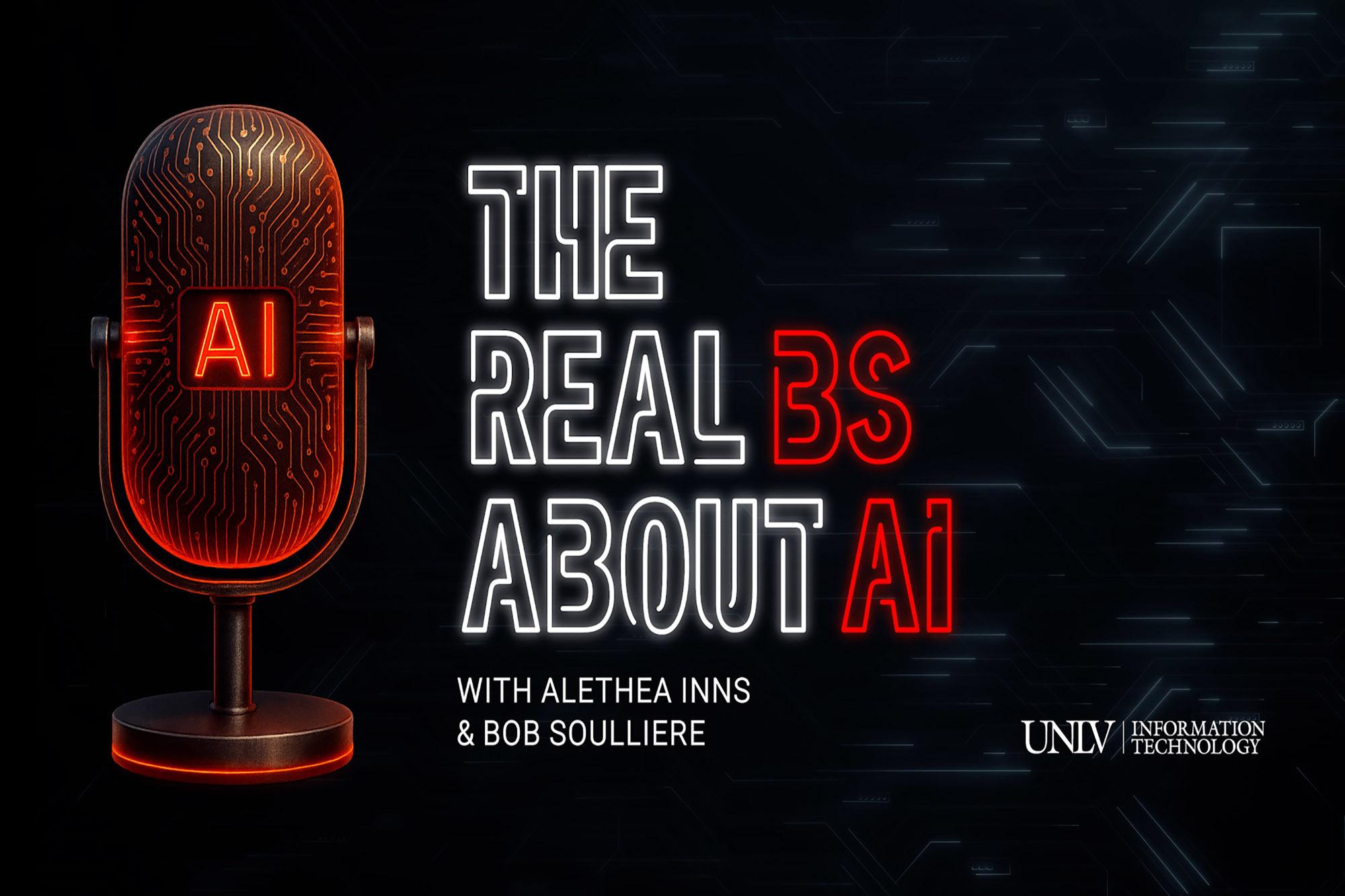
Starting April 24, 2026, UNLV websites, mobile apps, and digital documents must be accessible when they’re published to comply with a new digital accessibility rule under the Americans with Disabilities Act (ADA) Title II. The Real BS About AI podcast breaks down what this federal requirement means and how artificial intelligence (AI) can help faculty and content creators meet the standard.
New ADA Rule Requirements
“Every bit of your content has to be accessible from the beginning,” cohost Bob Soulliere said about shifting from reactive fixes to proactive design to comply with the new accessibility rule.
Aligned with Web Content Accessibility Guidelines 2.1 Level AA standards, the new accessibility rule applies to all websites, course materials, electronic documents, videos, and other digital resources. Key requirements include proper heading structures, alternative text for images, readable tables, and video captions that are 99 percent accurate and synchronized.
How AI Can Help Meet New Standard
AI tools such as Claude AI, ChatGPT, and Google Gemini can accelerate compliance, helping faculty create accessible content with alternative text for images and graphics that are essential to understanding the content.
“Gemini can do a good job at creating those descriptions. Faculty who used to spend hours trying to describe complex images, graphs, and charts can now spend minutes and just verify [that the descriptions] are correct,” podcast guest Bridgette Perreault from the Office of Accessibility Resources said.
Documents built with proper formatting and accessibility will export into accessible PDFs that screen readers can accurately interpret for individuals with disabilities. If the original document is unavailable, faculty can convert PDFs into WebCampus pages or eBooks with built-in accessibility features, Perreault shared about different workarounds.
Another AI tool available to faculty is Ally in WebCampus. Ally automatically scans courses, assigns an accessibility score, and flags issues. For image-heavy courses, it can automatically generate alternative text, saving instructors time while improving compliance.
What You Can Do Now
Accessibility can look different for every student, which is why building it in from the start is so important. An academic content creator herself, graduate student and fill-in cohost Safiyya Bintali shared practical steps faculty and staff can take to create accessible content from the beginning.
- Review your Ally score in WebCampus, fixing flagged issues like missing alt text or color contrast.
- Caption videos and edit auto-captions for accuracy.
- Provide transcripts with timestamps for audio files.
- Provide more than one way to access digital content, such as embedding videos and including direct links.
To support the campus community, UNLV has expanded resources through the Office of Accessibility Resources and the IT Help Desk. Faculty and staff can request help reviewing Ally scores, improving document formatting, and evaluating overall course accessibility. Support is available on a first-come, first-served basis.
Still, the responsibility for meeting the new accessibility standards rests with content creators.
“We’ve all benefited from accessibility. It's not just the law, it's the right thing to do,” Soulliere said.
The Real BS About AI publishes new episodes every two weeks on Apple Podcasts, Spotify, and YouTube. It blends humor, accessibility, and practical advice to make AI approachable for the UNLV community. View the AI Technology webpage for more information about AI at UNLV.
Short on time? Grab The Afterwards, a quick read about the episode, complete with prompts and notes you can copy and paste for your own use and workflow.
Content for this story was drawn directly from the podcast and has been converted to this platform with the assistance of AI. Our communications team verifies all content for accuracy.
Related Articles

Defending Your Turf: Your Defensive Playbook Against the New Cyber Playing Field
Cybercriminals are changing up their playbook with malicious QR codes and deepfakes. Here are ways to protect yourself and your teammates.
Las Vegas Students Learn to Create Tools and Solve Problems with AI at UNLV
UNLV’s AI Explorers Camp gave 25 middle and high school students hands-on experience with artificial intelligence and plans to expand next summer.
What UNLV Faculty and Staff Should Do Before Fall Semester Begins
From eduroam WiFi to WebCampus, here’s what to check to get you ready for the first day of the semester.